
Moving 12 Million Containers a Year, Smarter & Faster
Overview
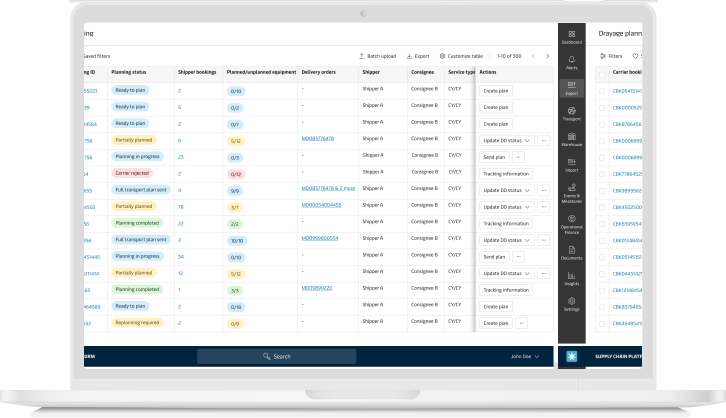
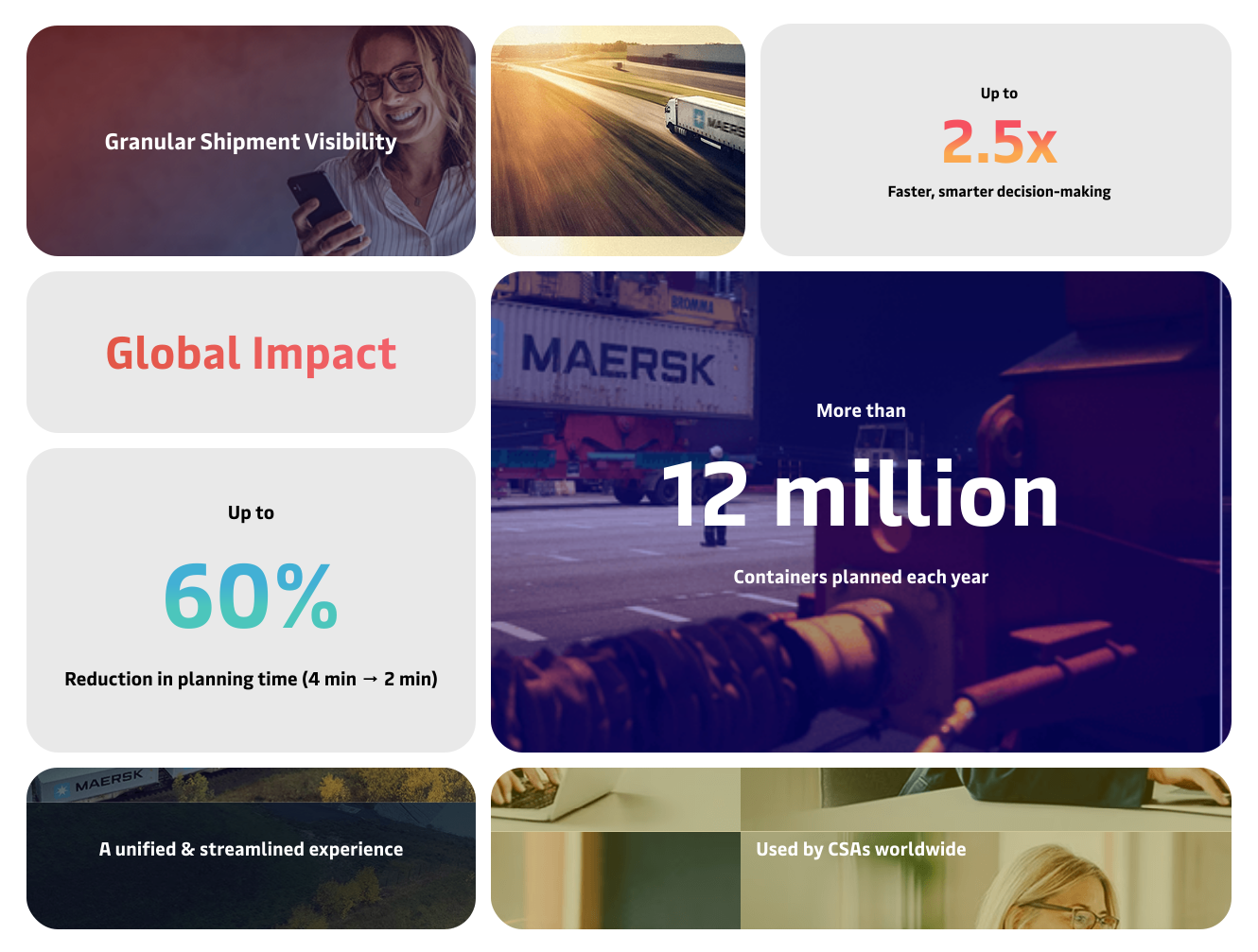
Each year, Maersk handles millions of container movements. However, landside delivery planning relied on manual workflows, email-based coordination, and region-specific processes, making operations slow, inconsistent, and error-prone. To streamline this, we designed the Delivery Planning Module within Supply chain platform—an automated system that reduces planning time by 50% and ensures a unified, efficient experience for Customer Service Associates (CSAs) worldwide.
The Impact
By designing a centralized Landside Delivery Planning module, we transformed the way logistics teams handle container deliveries. The results?
My Role
As a Senior Product Designer, I played a key role in shaping the strategy, experience, and execution of this solution. I worked closely with product managers, engineers, and logistics stakeholders to:
- Identify bottlenecks in existing workflows through In-depth user research.
- Run iterative usability testing to ensure seamless adoption across global teams.
- Design an intuitive, real-time UI that provides instant visibility into delivery statuses.
- Align design decisions with business goals, leading to measurable impact on efficiency.
Understanding the Problem
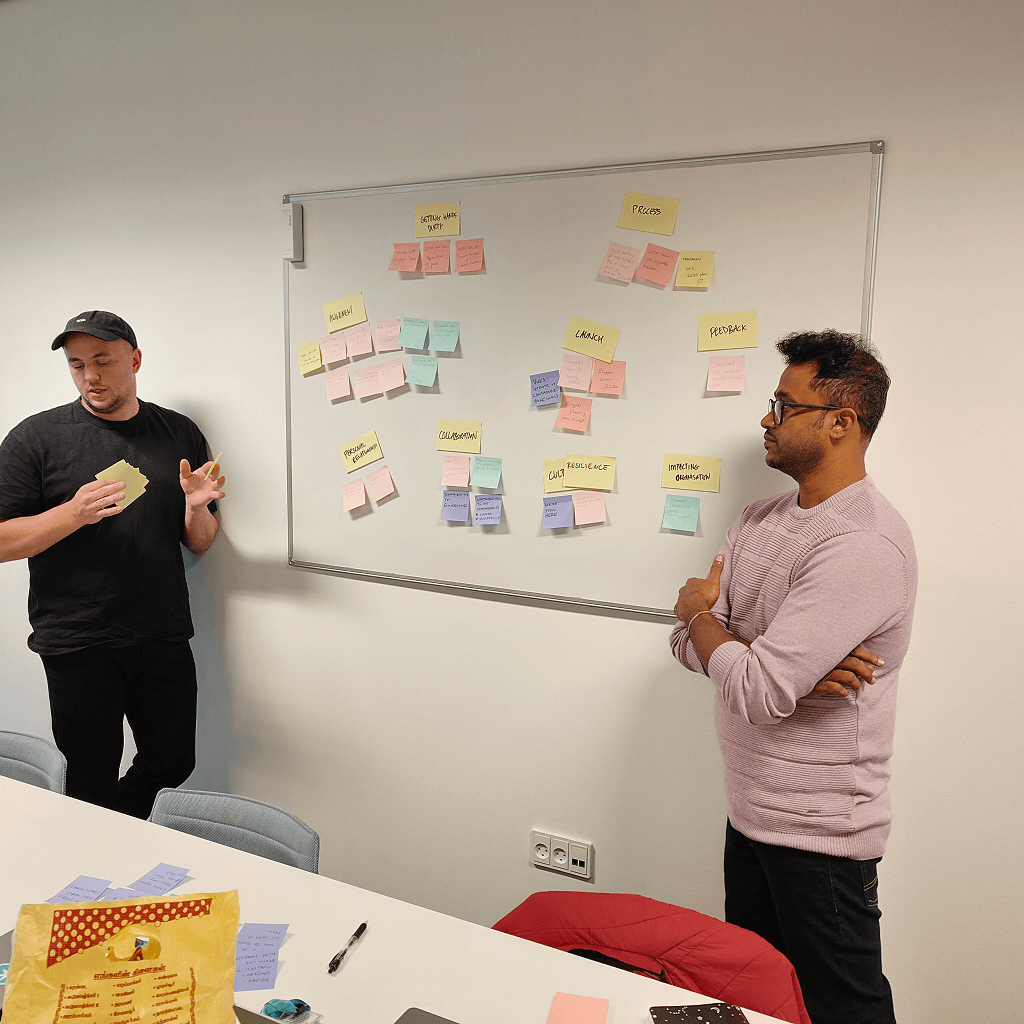
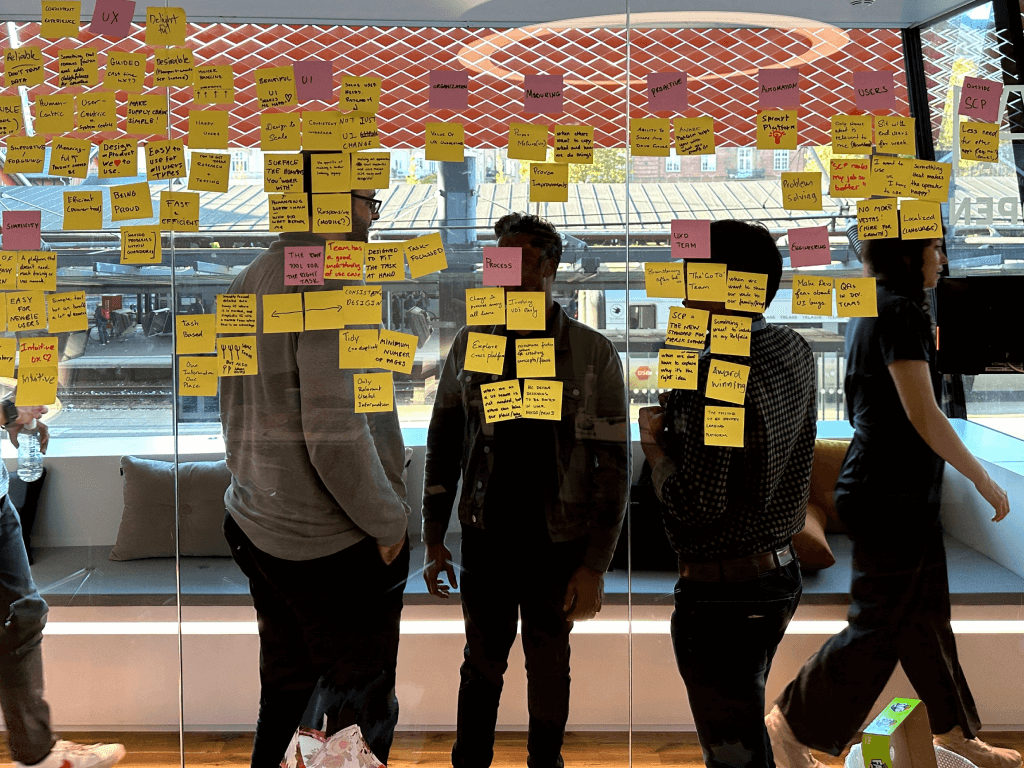
We conducted an in-depth research process to identify the key inefficiencies in the existing system. Overlay a semi-transparent highlight on key insights pulled from the workshop
The Challenge
Managing landside deliveries was a logistical nightmare—delays, miscommunication, and inefficiencies plagued the process. Logistics teams struggled with limited visibility, manual coordination, and unpredictable scheduling, resulting in missed delivery windows, unhappy customers, and millions in operational losses.

01. Inconsistent Regional Workflows
02. Time-Intensive Manual Processes
03. Lack of Visibility
The Solution
We introduced a unified, intelligent delivery planning experience that eliminates inefficiencies caused by regional discrepancies. By leveraging automation, enhanced visibility, and seamless integration, we created a single, standardized workflow that streamlines operations, reduces manual effort, and ensures a consistent user experience across Maersk’s global network.
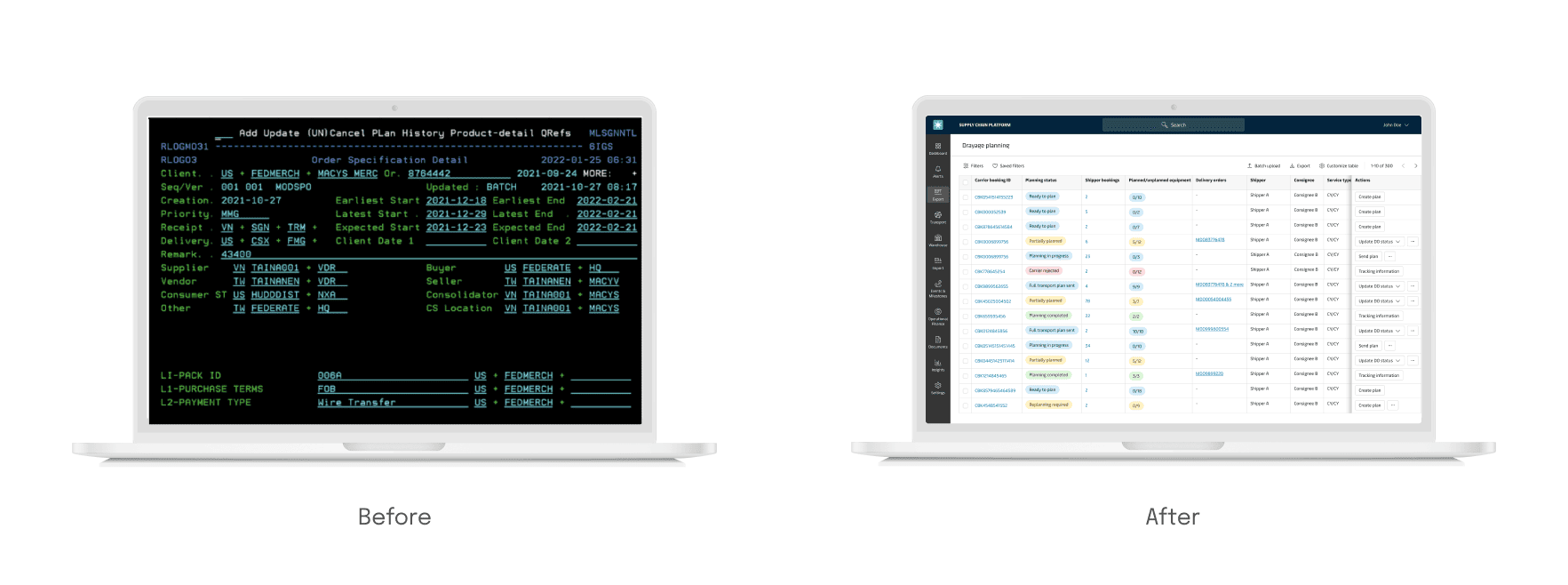
Solving Inconsistent Regional Workflows
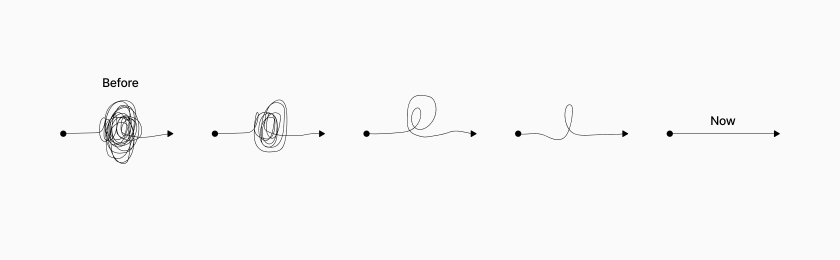
We designed a unified, standardized experience that streamlines planning, enhances visibility, and reduces manual errors—ensuring a seamless workflow for all users worldwide.
Enhanced Tracking & Traceability
Stakeholders gain real-time visibility into shipment progress and milestones. Eliminates reliance on emails and offline tracking.
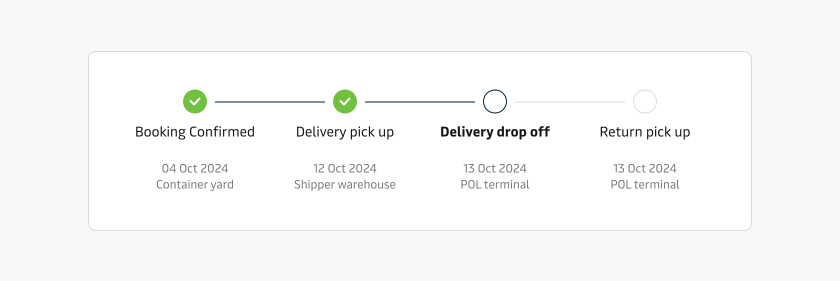
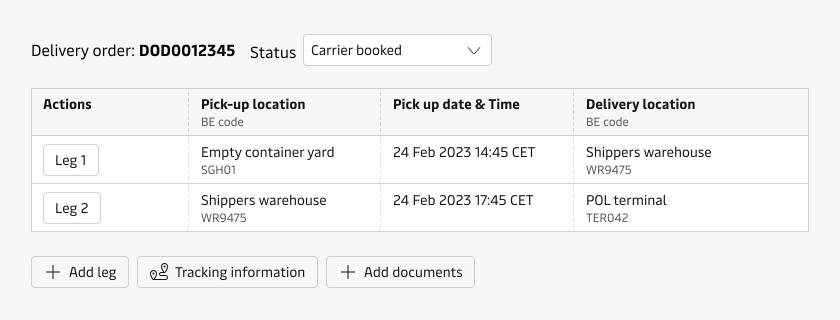
Seamless Multi-Leg Planning
Supports milk-runs, deconsolidation, and multi-leg deliveries with ease.
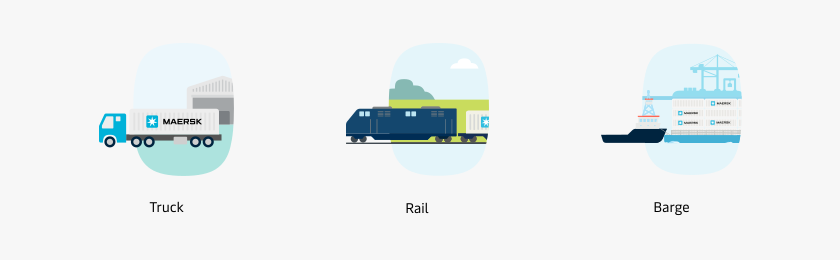
Integrated various Inland modes of Transport
Automatically generates delivery plans based on customer configurations, routing guides, and transport provider allocations. This service seamlessly integrates various inland modes of transport within a single, streamlined journey.
Ensuring Consistency with Maersk Design System
I ensured design consistency across the Maersk ecosystem by leveraging the Maersk Design System (MDS: UI). This allowed for a seamless, scalable, and intuitive experience while maintaining brand coherence across platforms.

Final Thoughts
This case study highlights how strategic automation and a user-first approach can drastically improve global operations. The Delivery Planning Module is just the beginning—paving the way for a smarter, more scalable logistics ecosystem.